
If Aaron was a car he would be a Golf 4
If Aaron was an animal he would be a Lion
If Aarin was a colour he would be a blue
If Aaron was something to wear he would be a T-shirt
If Aaron was a car he would be a Golf 4
If Aaron was an animal he would be a Lion
If Aarin was a colour he would be a blue
If Aaron was something to wear he would be a T-shirt
If Arek…
If Arek was a car, he would be a SUV.
If Arek was an animal he would be a bear.
If Arek wa a Color he would be black .
If Arek was something to wear, he would be a jacket.
If Arek was a Building he would be a blockhouse.
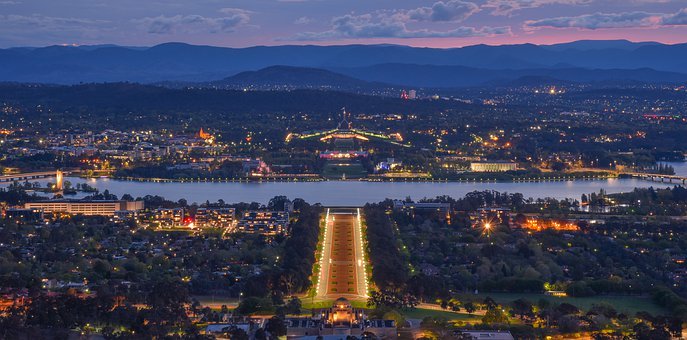
Canberra is the capital and the eighth largest city in Australia. the largest city inland lies in the australian capital territory, 286 km southwest of sydney and 669 km northeast of melbourne.
Area:814,2 km²
Populaiton:395.790 (2016)
Most popular activities available in canberra
1.Australian big building from 1988.
Adress:Parliament Dr, Canberra ACT 2600, Australien
Open:1988
State of building:November 12th 1981
2.Australian was memorial national war memorial.
Adress:Treloar Cres, Campbell ACT 2612, Australien
Founding:
3.Lake Bu Griffin Lake and war memorial.
4.National Gallery of Australia
The Kangaroos are masterful jumpers. They jump nine yards farther than a football goal is wide.
And as they make a lot jumpers in a row, they hop as fast as a car is allowed to a rive in the city.
And of course the Kangaroo has a bag to carry their baby.
What many do not know a kangaroo can grow to a man size or stay small, live in the steppe, in the swamp or on tress.
Around 65 different kangaroo species belong to the family.
For example there are the Red Kangaroo, the rufous have-wallaby and the yellow-footed rock-wallaby.
There are 68 different types of Kangaroo.
The fur color is brown and gray. they Life in Australia and there are twice as many kangaroos as humans. Red giant kangaroos can jump 8 to 9 far jump and 2-3 meters high.
The gray giant Kangaroo It manages with a set 13.5 m. The Kangaroo can run up to 50 km/h. The kangaroo is a herbivore he eat plants
. Kangaroobabys came to World after 20-40 Day´s to the world.
The koala is 61 to 85 cm tall and weighs between 4 and 14 kg.
Male koalas weighs mostly more as female koalas. The koala has brownish-silver-gray, woolly fur .He have two gripping hands with pointed, sharp claws, each with two thumbs and three opposite fingers, which are well suited for climbing and grasping twigs. The claws grow so that they can remove ticks Characteristic features are a protruding, dark nose and large ears, which shows that smelling and hearing play an important role in their lives. The koala has a large head in relation to its body, whose brain mass is relatively low.
In fact, koalas are just as small as a peanut and shell when they are born. To do this, they are naked, blind and cannot hear yet. In short: baby koalas would not be able to survive on their own. How do they do it anyway? They crawl into their mother’s pouch!
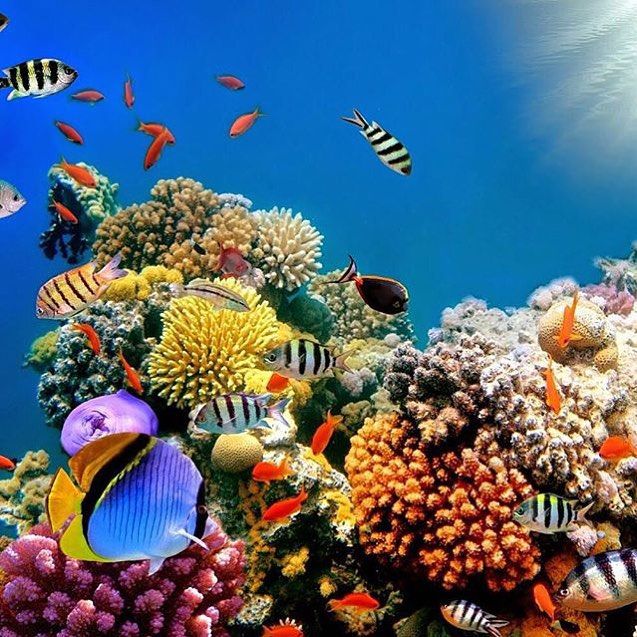
– the coral is an animal
– she became 1981 an unesco World Heritage
– it is 2.300 km long
– it has thousands riffs and hundreds islands, made of over 600 different stones and corals
– in total it is 348.700 km2 big
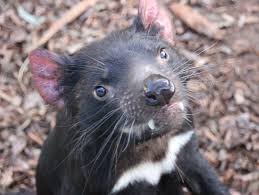
the size of a small dog.
Of the family Dasyuridae.
The thylacine called the Tasmanian tiger, or the Tasmanian wolf.
The devil facial tumour disease (DFTD) is an aggressive non-viral clonally transmissible cancer which affects Tasmanian devil.
Devil facial tumour disease causes tumours in and around the mouth.
Roadkill is an animal or animals that have been struck and killed by motor vehicles on highways. Some roadkill’s can also be eaten. Roadkill is often.
The gray places there live the Tasmian devil

Motorsport is a popular spectator sport in Australia, although there are relatively few competitors compared to other sports because of the high cost of the competition. The oldest motorsport competition in Australia is the Alpine Rally, which was first held in 1921, followed by the Australian Grand Prix, which was first held in 1928.
source: https://en.wikipedia.org/wiki/Motorsport_in_Australia
I like Motor sport because you drive your favorite racing car and try to win.
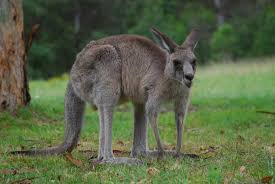
Species, food and habitat
Kangaroos are only found in Australia, Tasmania and New Guinea. Of the 61 species, the red giant kangaroo is up to 1.80 meters long and weighs 90 kilos. Kangaroos can jump 50 km for a short time. In the larger species these jumps are often 9 meters wide, in a gray giant kangaroo 13.5 meters were measured. These jumps are barely higher than 1.5 meters. Most species are dusk or nocturnal, but they can also be seen during the day. Kangaroos are herbivores that feed on grasses or leaves.
procreation
Kangaroo babies are born after 20 to 40 days. Immediately after the birth, the baby climbs into the mother’s bag and hangs on to the teat for two to three months. After half a year, they leave the mother’s bag for the first time, but are still nursed for half a year. Kangaroos usually avoid people but in times of drought and hunger they can become aggressive

 english_class_blog